ISSUE CATEGORIES
-
USEFUL LINKS
Australian climate sites
Tasmanian climate sites
Science / global sites
-
Where do Tasmania’s carbon emissions come from?
Tasmania has already reached its long term emissions reductions target – 60% below 1990 levels by 2050 – way ahead of schedule!
The chart shown below illustrates graphically the latest national carbon pollution inventory for Australia. As readers will see, Tasmania now appears to be virtually carbon neutral. Sequestration of carbon by the forest sector almost cancels out all of the carbon pollution that is caused by transport and all other sectors combined. So it appears.
On the face of it this totally unexpected success seems to be illogical and unbelievable, particularly because it can be argued that almost nothing significant has been done on the mitigation policy front to achieve that goal. So how did it come about? What is the story behind this story?
Climate Tasmania member Dr John Hunter provides an erudite explainer in this analysis.
(Hobart Mercury feature, September 1)
The national carbon pollution inventory data can be accessed via this link.
Posted in Climate science, Tasmania's carbon emissions
Comments Off on Where do Tasmania’s carbon emissions come from?
Facing up to climate change risks
Climate Tasmania held the third of its information forums on August 24. Here we looked into the major risks that Tasmania faces as the world’s climate heats up, and likely implications for Tasmanian society.
Our 1st forum had previously looked at some economic risks – for example to Hydro Tasmania’s energy output and for sea fisheries management. Our 2nd forum addressed likely implications that extreme temperatures, unseasonal weather and droughts may impose on agricultural production.
This 3rd forum, chaired by UTAS professor Jan McDonald, focussed on three other major risks that Tasmania is likely to face – an increase in the incidence and severity of wildfires, an accelerating increase in sea level rise and significant implications for human health. To explore these themes we invited expert speakers in each of these three areas to provide presentations.
Continue reading
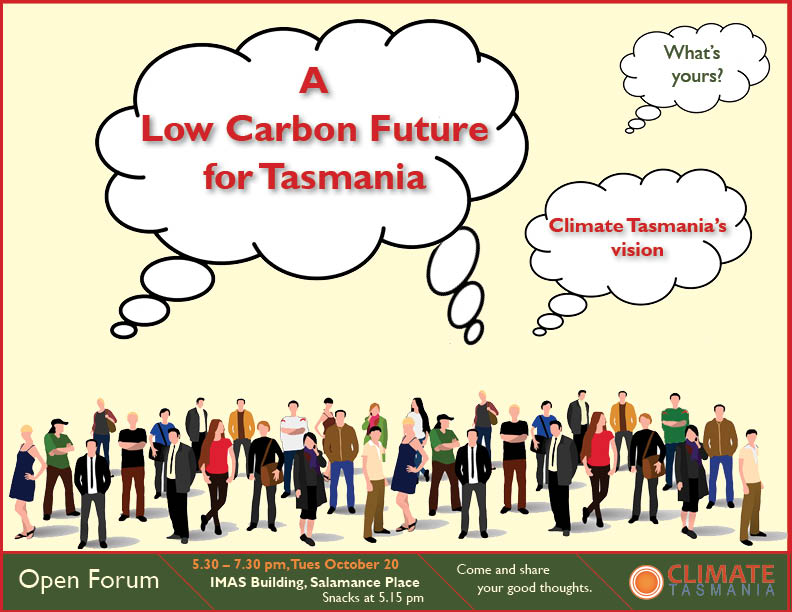
Invitation to climate risk forum
Drought – catastrophic bushfires – extreme temperatures – habitat disruption – human migration – crop damage – coastal erosion – spread of diseases.
• What are the main climate change risks that Tasmania will face?
• How well are we prepared to deal with those risks?
• How good is Tasmania’s risk information?
• Who is responsible for communicating and mitigating various risks?
This is the third in our 2015 forum series exploring how climate change will impact on our common future and what can and should be done here in Tasmania.
Climate and food are joined at the hip!
Food production is the world’s biggest industry. It comprises 10% of global GDP and accounts for 40% of the world’s land area. It depends on functioning ecosystem services and reliable climatic conditions.
Climate change is likely to have profound impacts on food production at the same time that energy-intensive food production practices themselves contribute to the global climate challenge.
Invitation to Food Forum
How will climate change impact on global food security?
What are the implications for Australian food production and supply?
What are the risks and prospects for the Tasmanian farming community?
How does the burgeoning ‘grow your own’ food movement fit into the big picture?
This is the second in our 2015 forum series exploring how climate change will impact on our common future and what can and should be done here in Tasmania.
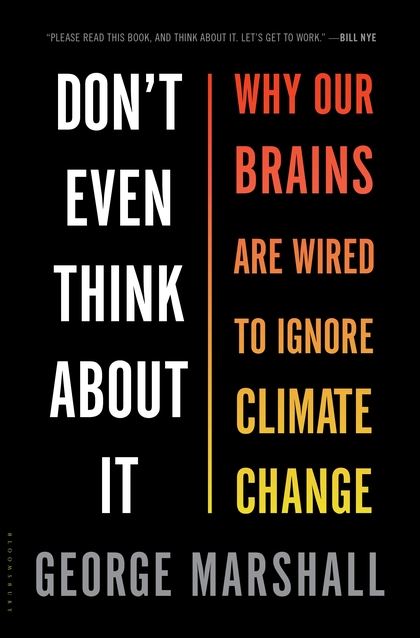
Don’t even think about it!
Why do most people never talk about climate change, even people with personal experience of extreme record breaking weather?
Why, despite overwhelming scientific evidence, do we still ignore climate change? What does will it take for society to accept what we already know?
These puzzling questions have dogged the minds of many climate scientists and communicators for years. Indeed, as Climate Tasmania member James Risbey, explained at our launch in December, the science – relevant to the larger policy questions – is already mature enough to make decisions.
The key word here is ‘framing’. What is needed at this point is better framing of the climate issue so that matches how people think and respond to these big picture issues.
With this in mind, George Marshall’s recent book – “Don’t even think about it!” – is essential reading. It’s available in Fullers and other good book stores, or you can buy online.
For a longer summary see HERE.
“If you haven’t got hold of George Marshall’s book yet you should. It will guide my thinking for a long time to come. It’s exceptionally well considered, the product of a high-grade mind that’s spent a lifetime seeking to understand people’s relationships with their environment and each other.”
Science journalist, Peter Boyer
Posted in Community awareness, Publications
Leave a comment
Update on climate change policy in Australia
Please click on this link to view Phil Harrington’s presentation on climate policy – as delivered to our first public forum on March 31.
The forum was a great success, there being a good turn out and stimulating conversation.
Please stay tuned for further forums coming up, on food security and local government themes. If you would like to be on mailing list just click here to go onto occasional mailing list.
Invitation to forum
How can we help each other?
After the State Government disbanded the Tasmanian Climate Action Council last year, Climate Tasmania was set up by some of the members of the former Council.
Our members are concerned professionals who have a diverse range of expertise, spanning scientific, legal, economic, health, social and policy aspects of climate change.
Tasmanian Energy Strategy
This is our submission to the Tasmanian Governments Draft Energy Strategy – issued in December for public comment.
In welcoming the opportunity to provide comments on the draft Tasmanian Energy Strategy, Climate Tasmania acknowledges the government’s commitment to “restoring Tasmania’s energy advantage” and “positioning Tasmania for the future”. It is critical that Tasmania effectively positions itself to capitalise on the economic opportunities presented by the changing nature of global economies and Tasmania’s renewable energy resource advantages.